Why Trusted Writing Journals Still Matter for Serious Writers
Over the years I have filled more notebooks than I can count. Some were cheap spiral-bound pads that fell apart after a month. Others were elegant hardcovers that sat on my shelf looking pretty while I avoided writing in them. It took me a long time to figure out that the journal itself matters. Not in a precious, decorative sense, but in a practical, daily-use sense. A good notebook changes how you write. It invites your hand to move across the page without resistance. It holds ink well and stays open flat. These qualities are rare, and they are the reason I have come to rely on a short list of trusted writing journals that I return to again and again.
When someone asks me what they should buy for daily writing, I do not send them to Amazon with a vague recommendation. I ask them about their pen, their writing habits, and whether they prefer lined pages or dots. The answers guide me toward a specific brand. Because the truth is that no single journal works for everyone. But there are a handful of brands that have earned a reputation for quality over many years. These are the ones I consider the trusted writing journals in my own rotation.
The Paper Is the Foundation
I learned this lesson the hard way. I once bought a beautiful leather-bound journal from a small Etsy shop. The cover was stunning. The paper was thin, grayish, and bled through with even a modest Pilot G2. I was frustrated every time I turned a page and saw the ghost of my previous entry. Good paper is not a luxury. It is a necessity for anyone who writes by hand regularly.
Tomoe River paper changed my standards. It is famously thin, almost translucent, but it handles fountain pen ink better than almost anything else. I use it in my Hobonichi Techo planner, which has become my daily companion for morning pages. The paper resists bleed and shows shading beautifully. But Tomoe River paper is not for everyone. Some writers prefer a toothier surface that gives a bit of drag, like the paper in a Midori MD notebook. That paper is creamier, thicker, and takes ink with a satisfying dry time. It feels substantial under the hand.
Rhodia uses a coated paper that is smooth and bright white. It works well with the Lamy Safari fountain pens I often use, and it dries quickly enough to avoid smudging. For writers who prefer ballpoints or gel pens, the Uni-ball Jetstream glides across Rhodia pages with almost no friction. The combination is a pleasure to use.

Hardcover Versus Softcover
This is a personal choice, but I have strong opinions. Hardcover journals like the Moleskine Classic or the Leuchtturm1917 offer a sturdy writing surface anywhere. You can balance them on your knee, on a crowded train, or at a coffee shop table. The hard cover protects the pages. But hardcovers add weight and bulk. A Leuchtturm1917 in the A5 size is heavier than you expect after you have filled half the pages. That extra weight matters if you carry your journal everywhere.
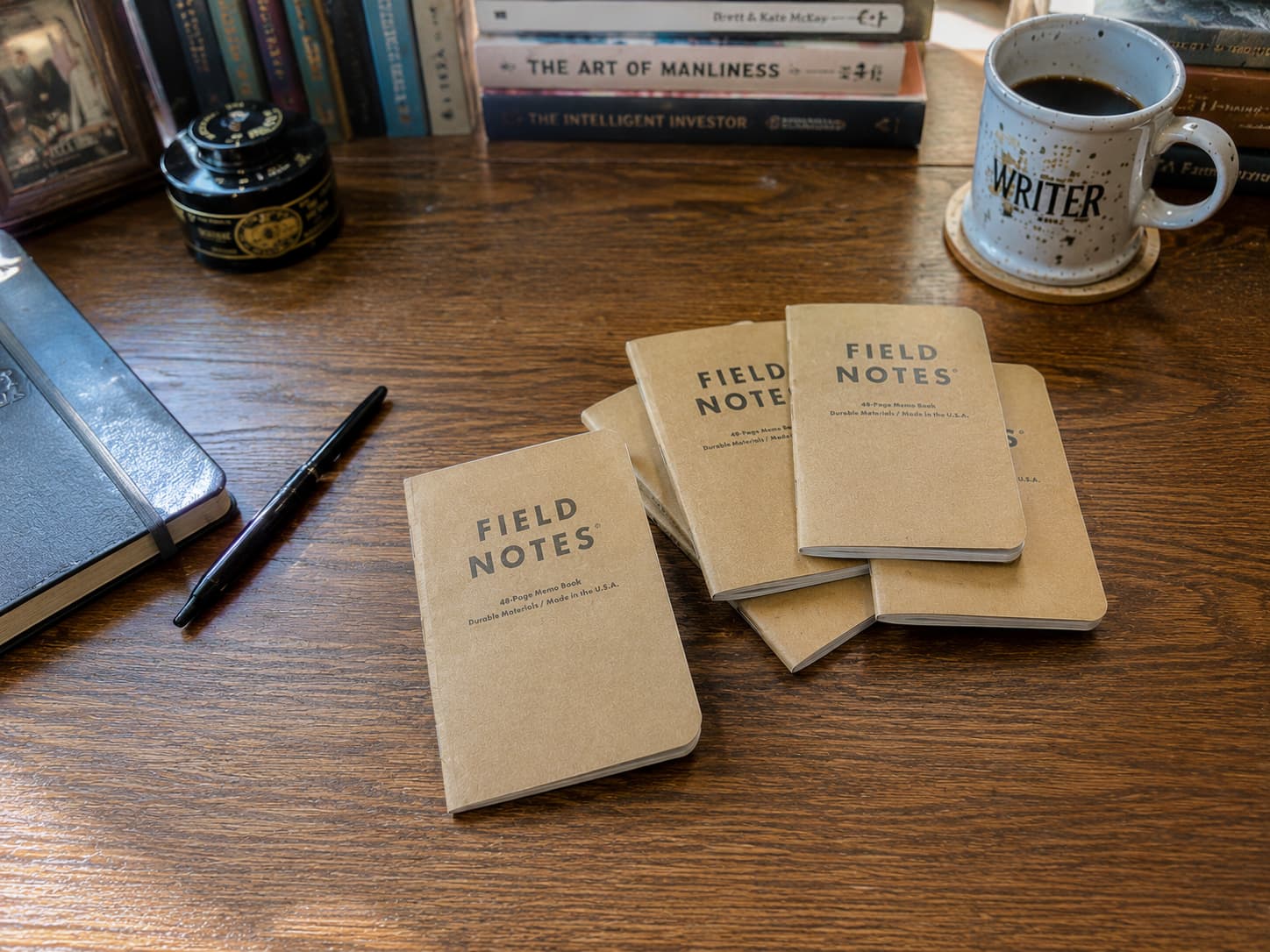
Softcover options like the Field Notes notebooks are lighter and more flexible. They slip into a back pocket or a small bag without complaint. But they do not offer the same flat-lay stability. You often have to hold them open with your other hand. For quick notes and lists, that is fine. For long writing sessions, it becomes annoying.
I keep both types in rotation. A Leuchtturm1917 for my daily long-form writing. A Field Notes for capturing ideas on the go. Each has its place. The key is knowing which one fits the task at hand.
How I Found My Go-To Journals
I started with Moleskine because of the brand's reputation. The black cover felt classic. The elastic band held my place. But I quickly noticed the paper did not love fountain pens. Feathering and bleed-through were common. I switched to Leuchtturm1917 and found the paper better, the numbered pages useful, and the thread binding more durable. For a while I thought I had found my forever notebook. Then I tried a Rhodia Webbie with its orange cover and staple binding. The paper was flawless, but the notebook did not lie flat when open. I moved on to Midori MD and fell in love with the simplicity. No fuss, no branding, just good paper and a simple cover that develops a patina over time.
Through this process I learned that the trusted writing journals in my collection are not the most famous or the most expensive. They are the ones that disappear when I write. I stop thinking about the notebook and start thinking about the words. That is the goal.
Pen and Ink Matter Too
A great journal is wasted with a poor pen. I have tested dozens of pens over the years and settled on a few that work well across different papers. The Lamy Safari is a workhorse. It starts every time, even after sitting unused for a week. The Pilot G2 is smooth and reliable for everyday writing. The Uni-ball Jetstream handles quick notes without skipping. I match the pen to the paper and the mood. For a Leuchtturm1917, I often use a fountain pen with a medium nib. For a Field Notes, a Jetstream in 0.7 mm. The combination affects how my handwriting looks and how comfortable the session feels.
Handwriting itself is part of the experience. I do not write as neatly as I used to, but I care more about the flow than the appearance. A good journal encourages me to write without worrying about mistakes. That freedom is hard to find.
Overcoming Writer's Block With the Right Tools
Writer's block is not a myth. It is a real obstacle that every writer faces. I have found that switching tools can sometimes break the logjam. If I am stuck, I will pick up a different pen or move to a different journal. The physical change resets my brain. The Artist's Way by Julia Cameron introduced me to the practice of morning pages. Three pages of longhand writing every day, without editing, without judgment. That practice requires a journal you do not mind filling with messy, unfiltered thoughts. It does not have to be beautiful. It just has to be there.
I have used a Hobonichi Techo for my morning pages for the past two years. The Tomoe River paper handles the ink from my fountain pen without bleeding, and the thin pages let me fit a lot of writing into a small book. The practice of morning pages has become a non-negotiable part of my day. And the journal I use for it is one of the trusted writing journals that I recommend to anyone who asks about starting a daily writing habit.
Journaling prompts can also help when the blank page feels intimidating. Simple questions like "What am I grateful for today?" or "What is one thing I learned this week?" can start the flow. I keep a list of prompts in the back of my notebook for days when nothing comes naturally.
Notebook Reviews and Real-World Testing
I have read many notebook reviews online. Some are thorough. Others are just promotional copy. The best reviews show the notebook in use, with real ink tests, photos of the paper under different lighting, and honest talk about flaws. I try to provide that kind of information when I write about journals. A notebook that works for a bullet journaling enthusiast may not work for a novelist who writes in longhand. A Hobonichi Techo is perfect for daily planning but too small for extended prose. A Leuchtturm1917 is great for a bullet journal because of the index pages and numbered pages, but the paper may not suit heavy ink users. Context matters.
I have also learned that price is not a reliable indicator of quality. Some expensive journals have disappointing paper. Some cheap ones are excellent. The Rhodia Webbie is affordable and reliable. The Midori MD is moderately priced and performs above its cost. The Field Notes are inexpensive and perfect for short-term projects. I keep a stack of them for brainstorming, lists, and rough drafts.
The Role of Habit and Ritual
A journal is only as good as the habit that fills it. I write every morning, usually before I check my phone. I keep my notebook and pen on my desk, ready to go. The ritual of sitting down, opening the journal, and writing the first line has become automatic. That consistency matters more than the brand of the notebook. But the right notebook makes the habit easier to maintain. When I used a journal that bled or fell apart, I found reasons to skip a day. Now I do not have that excuse.
I also use my journal for more than just writing. I paste in tickets, receipts, and printed photos. I draw diagrams and maps. I practice lettering and test new pens. The journal becomes a record of my life, not just my words. That versatility is possible only with paper that holds up under different uses. Tomoe River paper handles glue and tape well. Leuchtturm1917 paper is thick enough for light watercolor washes. The choice of journal shapes what you can do with it.
Final Thoughts
Finding the right journal takes time. I have tested dozens of brands and still rotate through several. But the trusted writing journals in my collection share a few qualities. They have good paper that works with my pens. They lie flat when open. They are durable enough to survive a year of daily use. And they disappear when I write, letting me focus on the words instead of the notebook. If you are looking for a journal that will support your writing practice, start with the brands I have mentioned. Test them yourself. See which one feels right in your hand. That is the only way to know.